
Where to Take Family Photos in Tokyo: 8 Spots We Actually Shot [2026]
A Japanese-Taiwanese couple living in Tokyo shares eight spots where we photographed our own child — light direction, the quiet hours, stroller access, and the permit rules for each.
Family in Tokyo Editorial
September 2, 2026
Where should you take family photos in Tokyo?
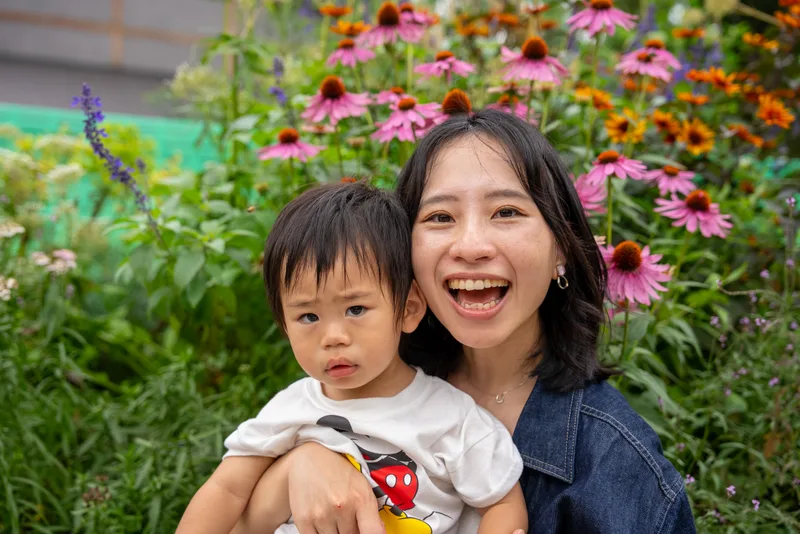
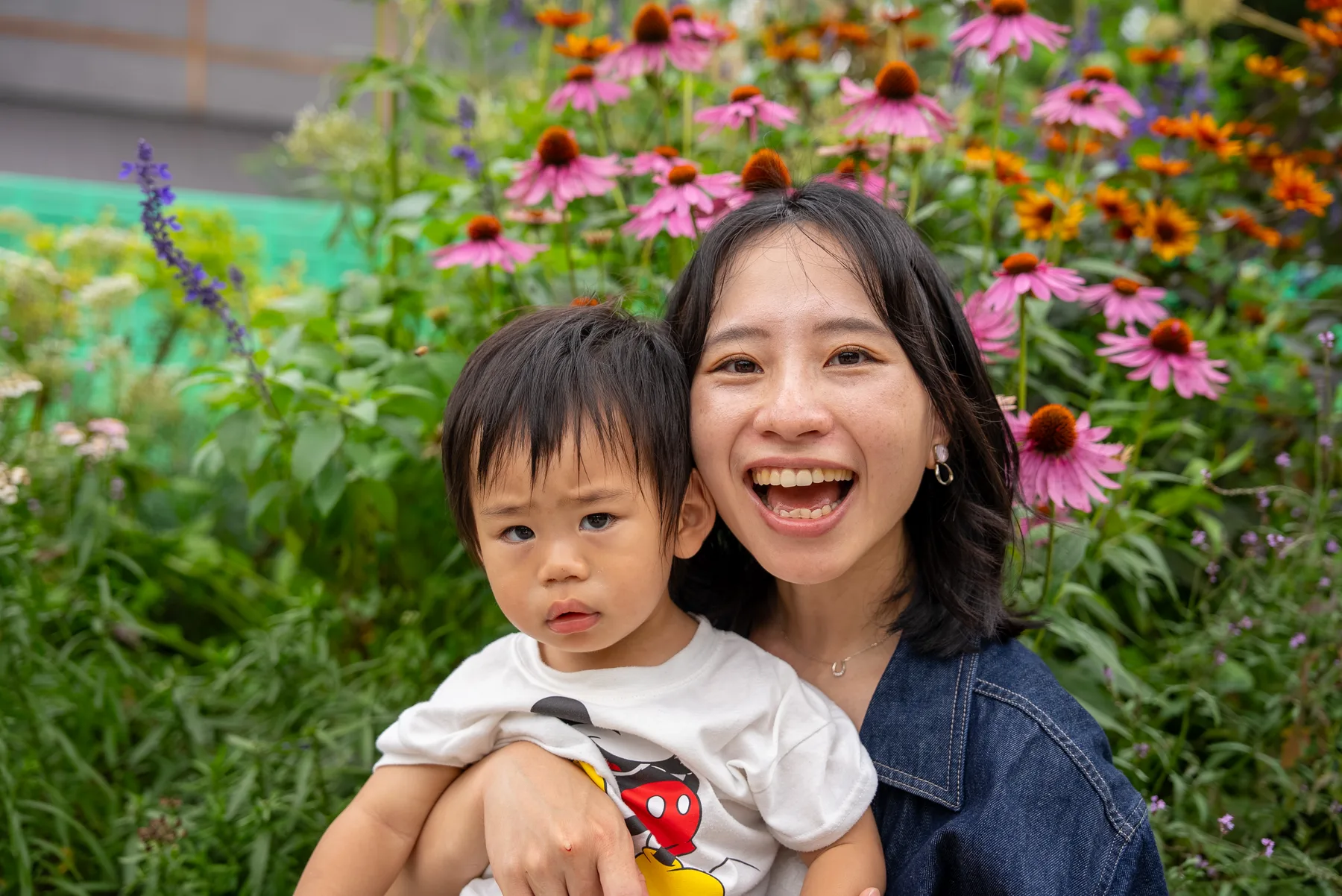
The short answer: pick somewhere that is close to a station, has room to sit, and has a window when few people are around. Tokyo has too many photogenic places to choose from, but adding “with a small child” narrows it down fast.
- Mornings are easiest — fewer people, and softer light
- Parks and shrines have rules worth checking — metropolitan parks may require a permit depending on what you are doing
- Keep one indoor fallback — rain and midsummer heat will otherwise cancel your plan
We are a Japanese-Taiwanese couple living in Tokyo. Every photo in this article is one we took while out with our own child. This is not another list copied from a tourism site — it is how each place actually works from behind the camera.
| Spot | Best for | Easiest time | Stroller | Photo rules |
|---|---|---|---|---|
| Yoyogi Park | Toddlers, natural expressions | Morning | ◎ | Permit depending on setup |
| Asakusa, Kaminarimon | Instantly reads as Tokyo | Early morning | △ crowded | Worshippers first |
| Yoyogi Hachimangu | Quiet, anniversaries | Weekday morning | △ steps | Confirm in advance |
| Kyu-Nakagawa (early sakura) | Cherry blossoms in February | Morning | ○ | Metro park + river authority |
| Sumida Park (Somei-Yoshino) | The late-March classic | Weekday morning | ○ | Ward parks (Taito / Sumida) |
| Sumida River yakatabune | Three generations, evening | Evening | △ boarding | Varies by operator |
| Niijuku Traffic Park | Vehicle-obsessed kids | Weekday morning | ◎ | Ordinary visitor use |
| Shibuya Hikarie | Rain, extreme heat | Weekday | ◎ | Ordinary visitor use |
Only three things decide the location
Knowing a hundred place names does not help if you have no way to choose between them. These are the three things we actually look at.
Light: mornings are the most forgiving
Midday sun comes straight down, dropping heavy shadows under the eyes and flattening expressions. Morning light arriving at an angle keeps faces clear of shadow and brings out the green of the trees. An overcast day is not a bad day to shoot — it is a soft day with no harsh shadows.
Crowds: find out what hour it empties out
The biggest nuisance in a family photo is a stranger walking through the background. The same place is a different place an hour earlier. At somewhere like Asakusa, sixty minutes changes everything.
Travel: past ten minutes from the station, kids run out
Choosing with adult legs in mind usually means arriving after your child’s patience has already gone. Use ten minutes’ walk from a station as the limit and spend the leftover energy on the photos instead. For getting around with a stroller, see our Tokyo subway guide for families.
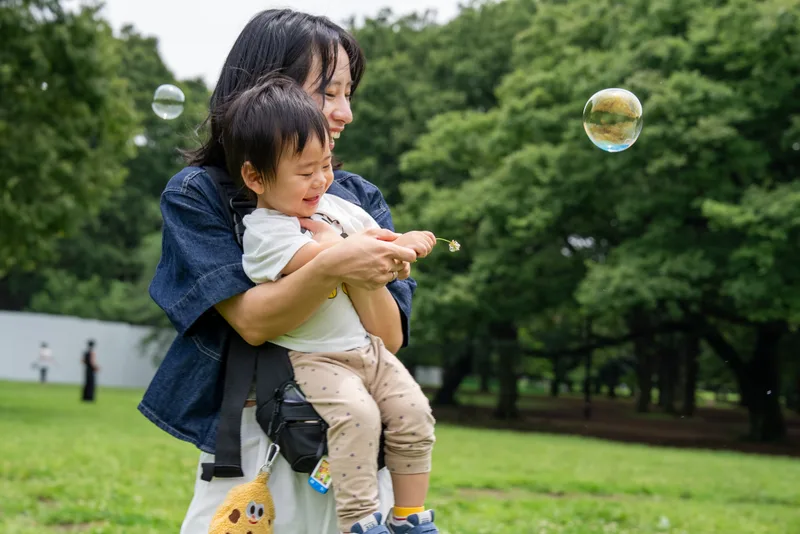
Green space and unposed faces: Yoyogi Park
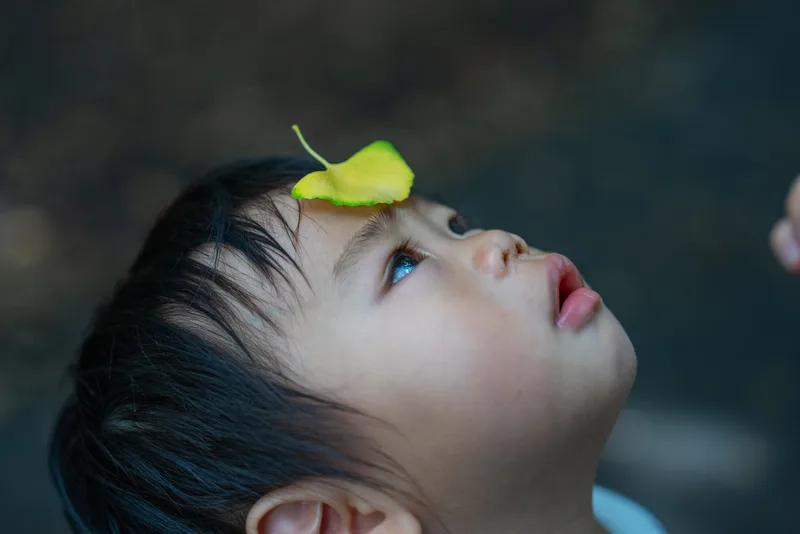
Wide lawns and stands of trees, so you can let a child run and photograph them as they go. Nobody has to pose — the playing itself is the picture. It is close to Harajuku and Yoyogi-koen stations, and the paths are flat enough for a stroller.
Fitting it into a day: Yoyogi Park and Yoyogi Hachimangu (below) are within walking distance of each other, and both pair naturally with Harajuku and Meiji Jingu.
- Easiest time: Morning, when light comes through the trees at an angle
- Getting there: A few minutes from JR Harajuku or Yoyogi-koen station
- Cost: Free
- Stroller: Paved paths, easy to push
- With kids: Locate the shade and the toilets first
Now the part most guides skip: the photo rules. Yoyogi Park is a Tokyo metropolitan park, and depending on what your shoot involves, it may require an application in advance. There are conditions on group size, the area you occupy, and the hours, and some zones are closed to photography on certain days. A family snapshot and a shoot with equipment set up are treated differently, so if you are hiring a photographer, check with the park first.
⚠️ Whether a permit is required, along with conditions and fees, can change. Confirm with the Yoyogi Park Service Center (03-3469-6081) or the official site before shooting.
(Official: Yoyogi Park)
One frame that says Tokyo: Asakusa, Kaminarimon
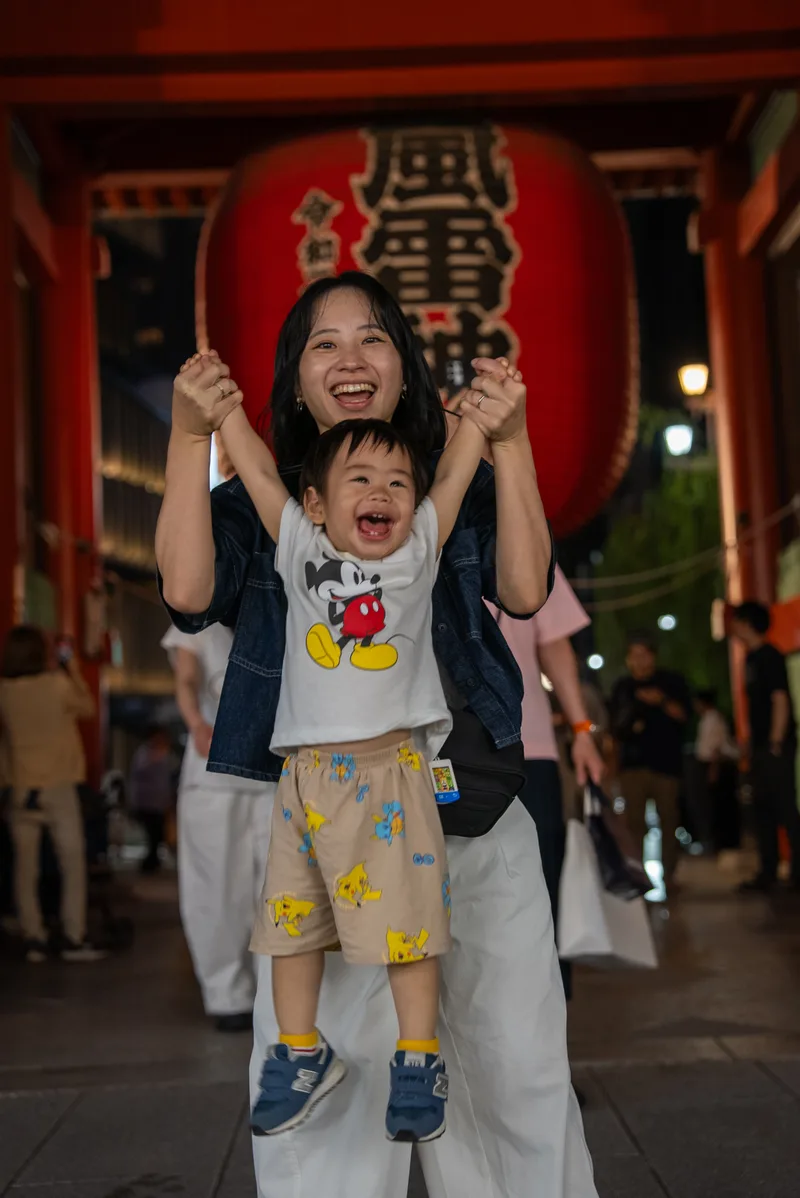
Put the great lantern in the frame and nobody needs the caption. Years later, one glance tells you which trip it was — that is what a place like this is for.
The problem is people. By day there is a queue of photographers in front of the gate and your background fills with strangers. Early in the morning the crowd thins out and the same composition becomes a different photograph. The Nakamise shops are still shuttered at that hour, so if the closed shutters bother you, stay around the gate itself.
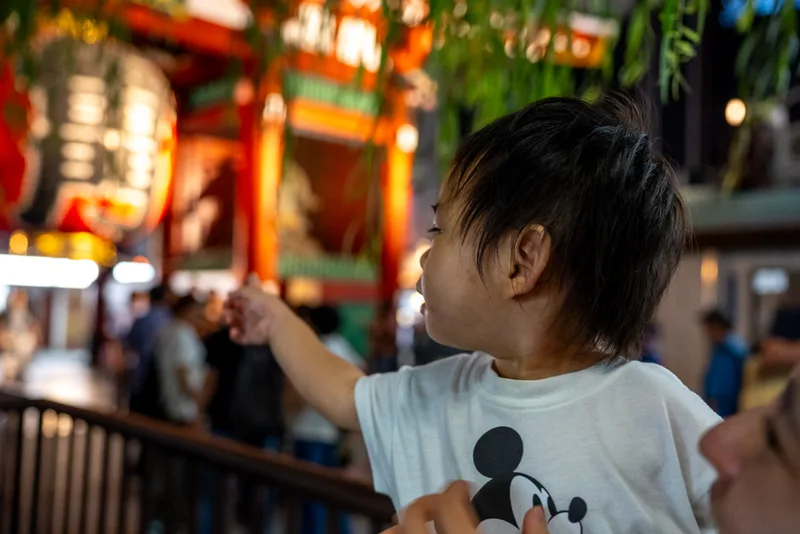
Fitting it into a day: Kaminarimon and Sumida Park (below) are a walk apart, so in sakura season they go in the same day — and a yakatabune boat in the evening follows on naturally.
- Easiest time: Early morning. Midday is packed
- Getting there: Right outside Asakusa station (Tokyo Metro Ginza line)
- Cost: Free
- Stroller: Nakamise is hard to push through when busy
- With kids: A kimono rental raises the density of the photos
Sensoji is a place of worship. Not blocking the path of worshippers, and not planting yourself to shoot through a crowd, are the baseline. Tripods and commercial shoots are handled differently, so contact the temple in advance.
⚠️ There is no separate published guidance on photography within the grounds. For a formal shoot, contact Sensoji directly (03-3842-0181).
For a full day in the area, see Asakusa with kids: a one-day route.
Quiet dappled light: Yoyogi Hachimangu
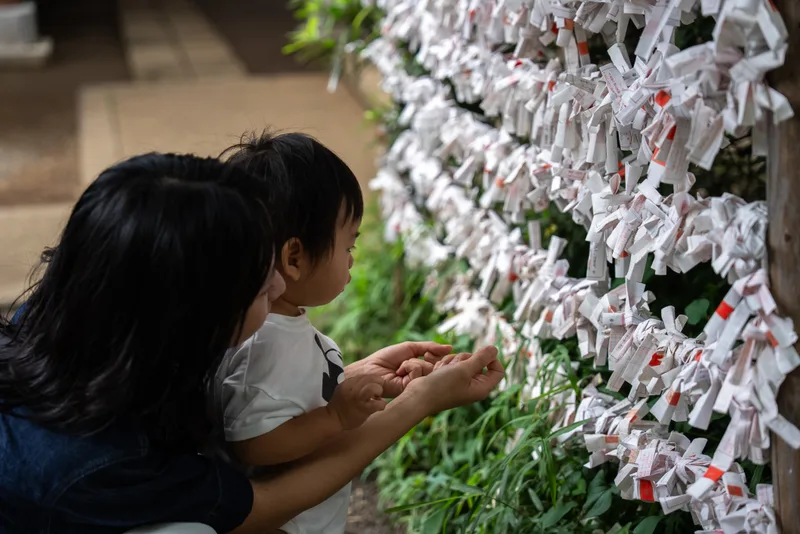
A shrine within walking distance of Yoyogi Park. Trees enclose the grounds, and on a clear day the light falls through them beautifully. It is far less busy than Asakusa, so you can take your time.
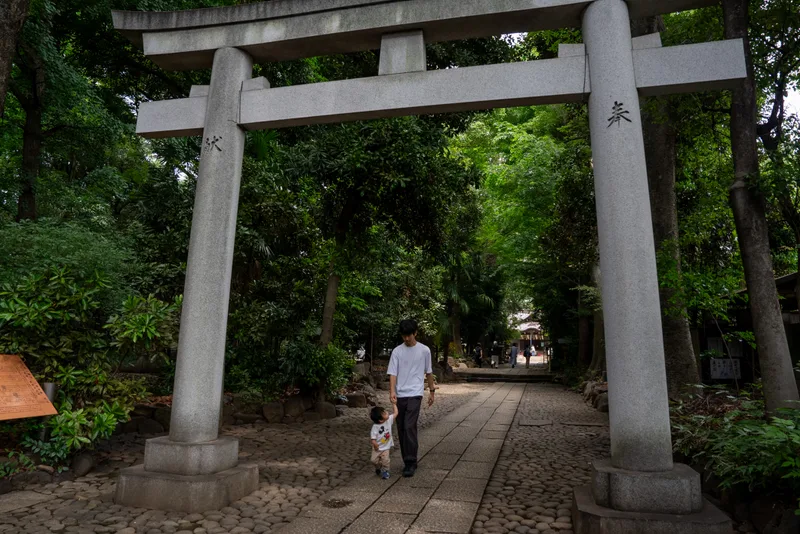
A shrine is not a tourist attraction, though — it is a place of worship and ritual. Sources describe a photographer’s shoot here as something done with prior permission, and in the context of receiving a blessing. Some photography companies write that booking a shoot without the blessing breaks the rules. None of this is published by the shrine as official documentation, so if you are considering a shichi-go-san or first-shrine-visit shoot, contact the shrine directly.
- Easiest time: Weekday morning
- Getting there: A few minutes from Yoyogi-hachiman (Odakyu) or Yoyogi-koen station
- Cost: Free (blessing fees separate)
- Stroller: Steps on the approach — a carrier is easier
- With kids: Weekends in October and November are busy with shichi-go-san
⚠️ Whether photography is allowed, the conditions for permission, and the offering amounts all depend on the shrine’s judgment and the season. Always confirm with Yoyogi Hachimangu directly.
Sakura runs on two schedules, a month apart
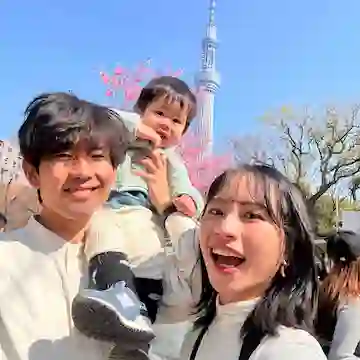
Putting Tokyo Skytree and cherry blossoms in one frame carries both the season and the place. What makes this workable is that peak bloom shifts by about a month depending on the variety.
| Variety | Typical peak | Where we shot it |
|---|---|---|
| Kawazu-zakura (early, deep pink) | Late February to early March | Kyu-Nakagawa (Higashi-Ojima) |
| Somei-Yoshino | Late March to early April | Sumida Park (Asakusa / Skytree) |
In other words there are two cherry blossom seasons in a year, which makes trip dates far easier to line up. Both spots are covered separately below.
⚠️ Bloom and peak dates move every year with the weather. Check the forecast before you travel.
For cherry blossom viewing itself, see Tokyo cherry blossoms with kids: 5 spots.
Deep pink in February: Kyu-Nakagawa
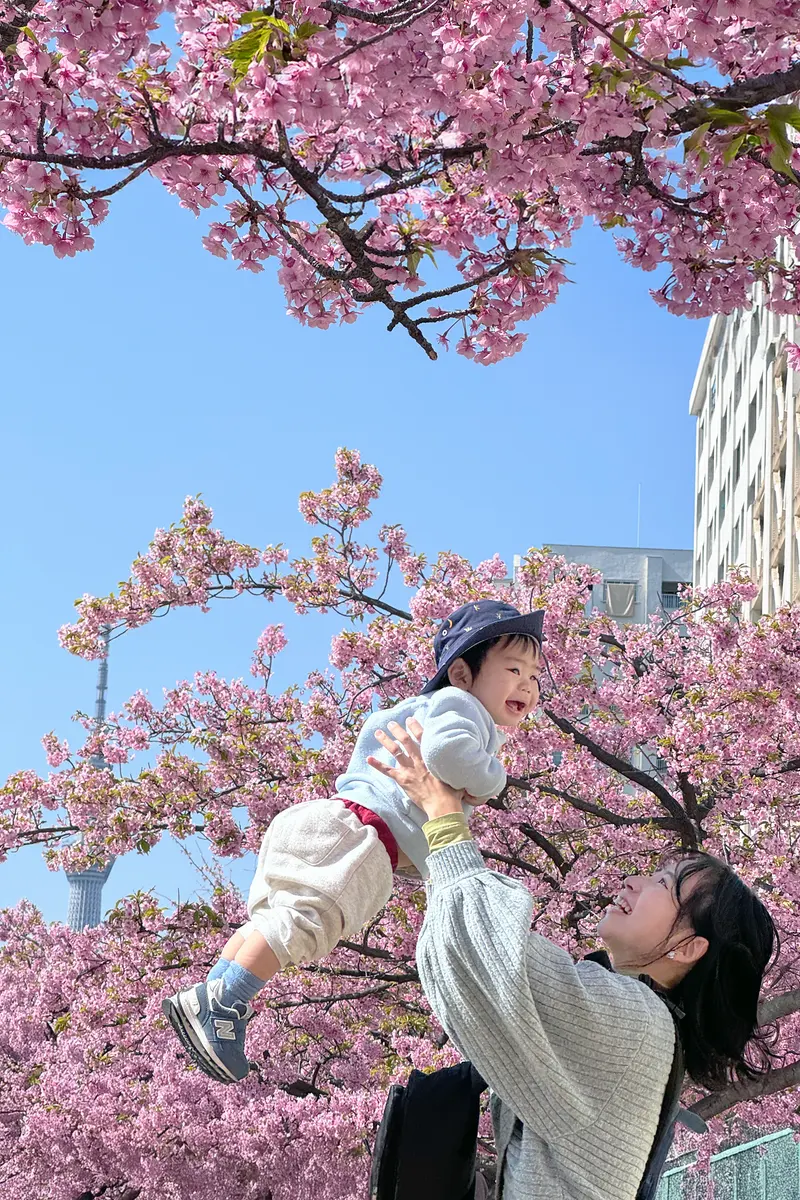
The photo above was taken along Kyu-Nakagawa. Kawazu-zakura line the river with Skytree standing on the far bank, so you can have blossoms and the city’s landmark together in February. Crowds are lighter than in Somei-Yoshino season, which matters a great deal with a small child.
- Peak: Late February to early March
- Getting there: A few minutes from Higashi-Ojima station (Toei Shinjuku line); Ojima-Komatsugawa Park adjoins the river
- Cost: Free
- Stroller: The riverside promenade is flat
- With kids: It is still cold by the water — bring an extra layer
The adjoining Ojima-Komatsugawa Park is a metropolitan park, so as at Yoyogi Park, a shoot may require a permit depending on what it involves. Check first if a photographer is coming.
⚠️ Permit requirements and conditions can change — confirm with the Ojima-Komatsugawa Park Service Center (03-3636-9365). The riverbank itself falls under the river authority and may be handled differently from the park.
(Official: Ojima-Komatsugawa Park)
The late-March classic: Sumida Park
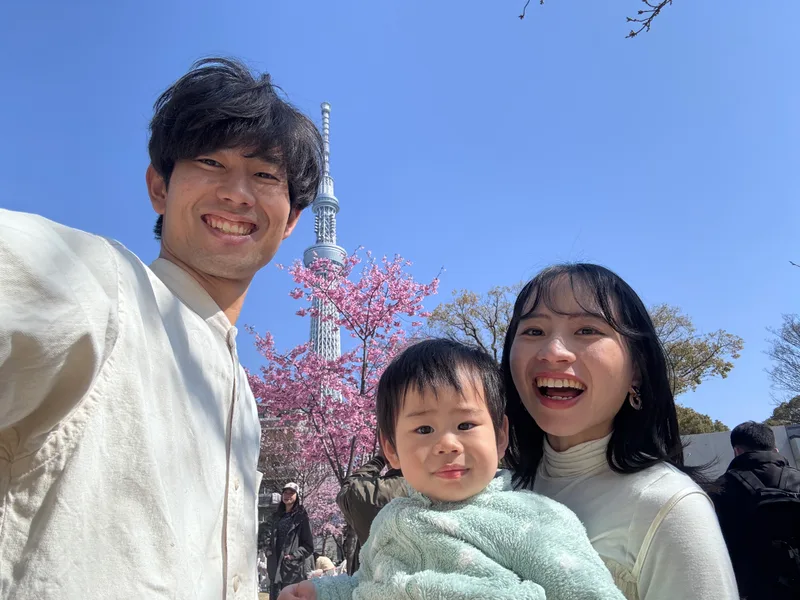
This one was taken in Sumida Park. Cherry trees line both banks of the Sumida River, with Skytree across the water. The real advantage is that it goes in the same day as Asakusa — shoot at Kaminarimon, then walk over.
The same “Sumida Park” is split between two authorities: the Asakusa side is Taito ward, the Skytree side is Sumida ward. Which side you are on decides who you ask about photography.
- Peak: Late March to early April
- Getting there: Asakusa station (Taito side) / Honjo-Azumabashi or Tokyo Skytree station (Sumida side)
- Cost: Free
- Stroller: Flat promenade, crowded during the sakura festival
- With kids: Weekends at peak bloom are busy — weekday mornings are better
⚠️ Festival dates, crowding, and how each ward handles photography in its parks change from year to year. Check Taito and Sumida ward information separately.
(Official: Cherry blossoms at Sumida Park (Taito ward))
Evenings and three generations: a Sumida River yakatabune
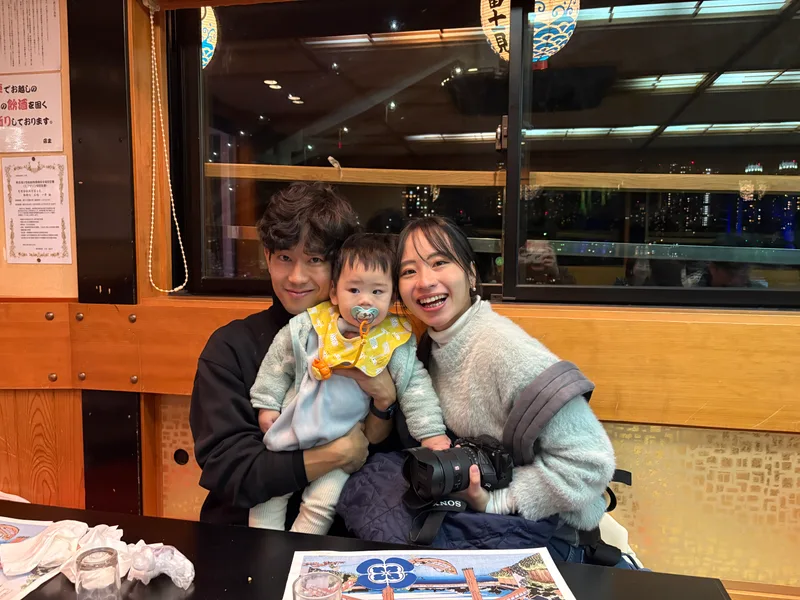
For an evening, a yakatabune boat on the Sumida River is an option. The tatami seating means grandparents can stay seated throughout. Note that yakatabune come as shared cruises and private charters, and on a shared cruise you are on the boat with other guests. If you want three generations photographed without an audience, book a private charter. Footing is unsteady while boarding, so keep small children in sight.
⚠️ Fares, routes, and charter terms differ sharply between operators. Confirm directly when you book.
Where the child takes the lead: Niijuku Traffic Park
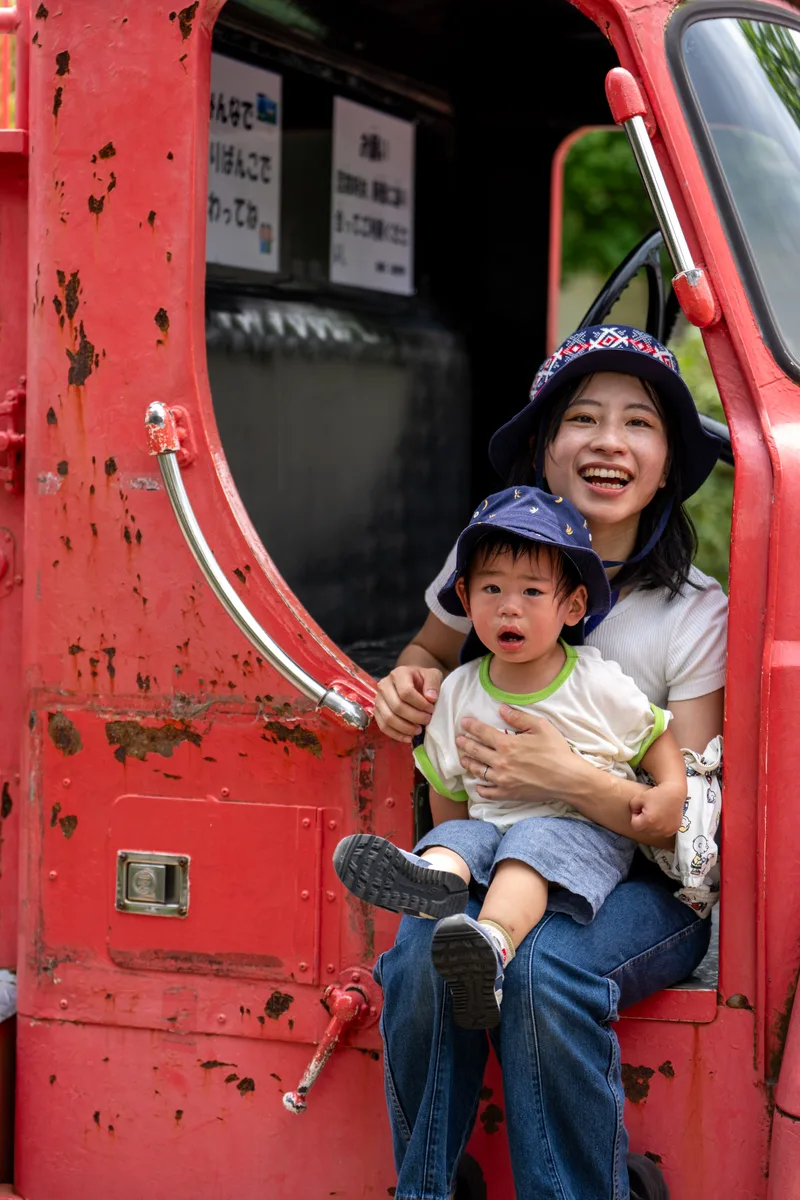
Niijuku Traffic Park in Katsushika ward has a real Toei bus and a fire engine on display, and admission is free. A child who loves vehicles needs no prompting from you at all. A place where kids forget they are being photographed is worth a lot in family photography.
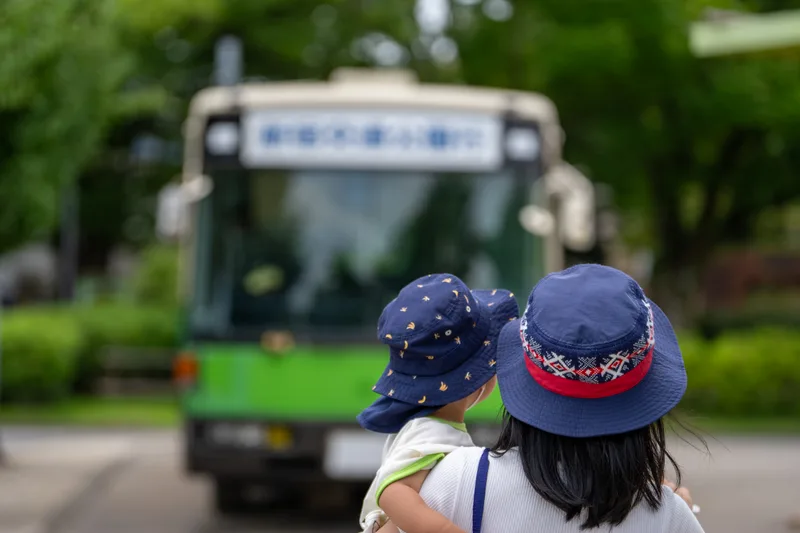
- Hours: 9:00 – 17:00 (closed December 29 – January 3)
- Admission: Free
- Getting there: About 20 minutes’ walk from JR Kanamachi station, or 5 minutes from the “Kameari Keisatsusho-mae” Toei bus stop
- Stroller: Flat throughout
- With kids: Free loan of bicycles and pedal cars, plus a miniature steam train
It is a way out from the centre, but that also means heading away from the crowded sightseeing areas — which is the point.
⚠️ Hours, closing days, and how the loan equipment is run can change. Check the Katsushika ward page.
(Official: Niijuku Traffic Park (Katsushika ward))
The rain and heat fallback: Shibuya Hikarie
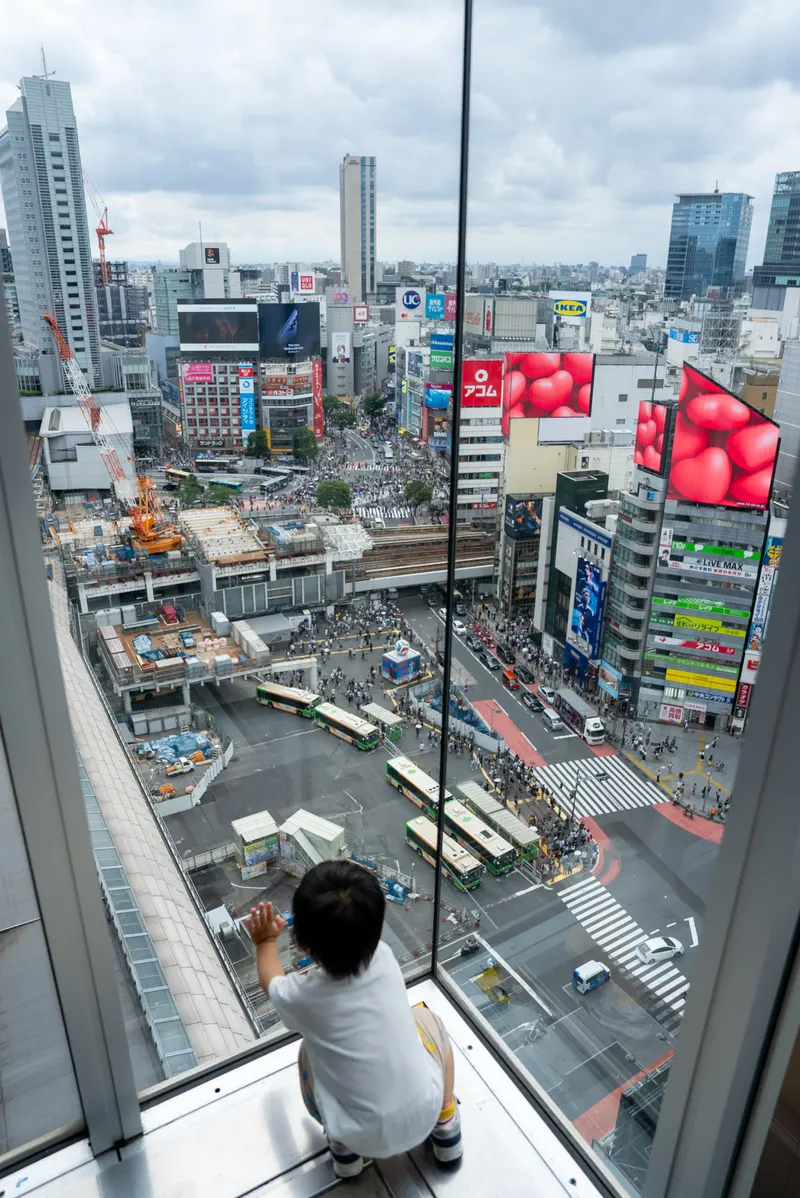
Build a plan entirely outdoors and rain or midsummer heat takes all of it. One fallback is enough.
The Sky Lobby on the 11th floor of Shibuya Hikarie is a viewing space that is free and connected directly to the station. A wall of glass looks down over Shibuya, and a child pressed against it is already a photograph. It is air-conditioned and stroller-accessible, which makes it useful as a midday refuge in summer.
Fitting it into a day: It slots into a Shibuya shopping afternoon without needing its own time block.
- Cost: Free
- Getting there: Directly connected to Shibuya station
- Stroller: Lift access
- With kids: The glass reflects — put the lens against the window and it disappears
⚠️ Sky Lobby opening hours change with building operations and events. Check the official site before visiting.
(Official: Shibuya Hikarie)
Frequently asked questions
What age can you start?
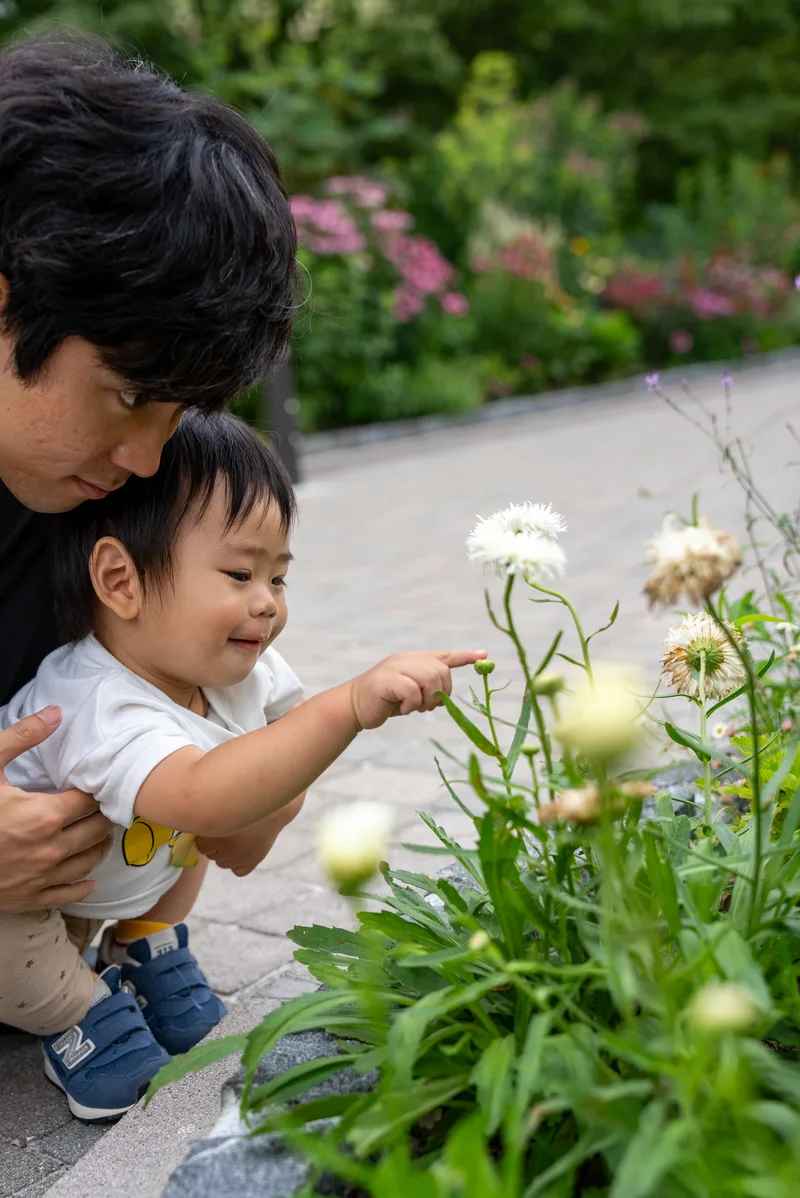
There is no lower limit. That said, ages one to three will not sit still, so photographing them mid-play works far better than trying for poses. Around the time a child starts walking, a park is the best match.
What happens if it rains?
Switching to an indoor viewing space or a shopping complex is the realistic answer. In light rain, an umbrella or a raincoat becomes a prop and you get genuinely rainy-day pictures. If your schedule allows, keep one spare day.
What should we wear?
Just keeping the family’s colours in the same tonal range makes everyone look coherent. Nobody needs to match exactly. Against a green park, white or beige works; in the city, darker colours hold up better.
Do we need a permit?
It depends on the place. Metropolitan parks may require an application depending on what you are doing, and shrines may require prior permission tied to receiving a blessing. Treat a snapshot as an ordinary visitor and a shoot with a photographer as two different things, and check with each site in advance.
How long does it take?
Around two hours including travel. Children do not concentrate for long, so one location at an unhurried pace leaves better expressions than two or three in a day.
The 8 spots at a glance
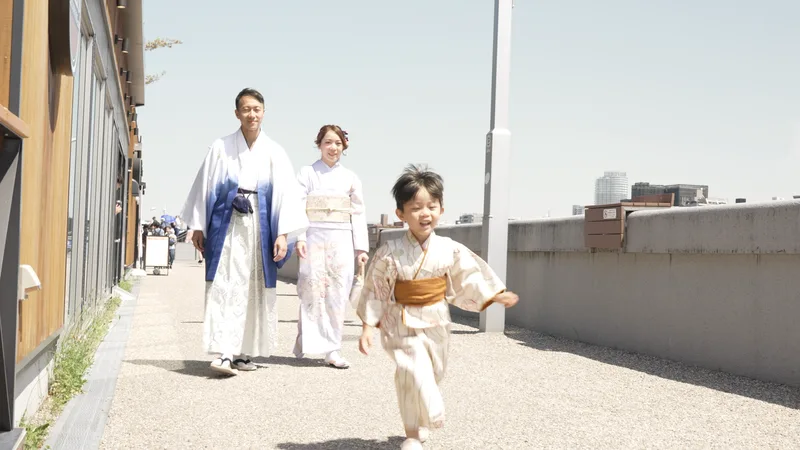
| Spot | Easiest time | Cost | Stroller | Nearest station | Rain |
|---|---|---|---|---|---|
| Yoyogi Park | Morning | Free | ◎ | Harajuku / Yoyogi-koen | × |
| Asakusa, Kaminarimon | Early morning | Free | △ | Asakusa | × |
| Yoyogi Hachimangu | Weekday morning | Free (blessing extra) | △ | Yoyogi-hachiman | × |
| Kyu-Nakagawa (early sakura) | Morning | Free | ○ | Higashi-Ojima | × |
| Sumida Park (Somei-Yoshino) | Weekday morning | Free | ○ | Asakusa / Honjo-Azumabashi | × |
| Sumida River yakatabune | Evening | Varies | △ | Asakusa and others | ○ |
| Niijuku Traffic Park | Weekday morning | Free | ◎ | Kanamachi | × |
| Shibuya Hikarie | Weekday | Free | ◎ | Shibuya | ○ |
For stitching the travel together, our Tokyo subway guide for families helps. That covers deciding where to shoot. One last thing, about what remains afterwards.
Keeping that day, in photographs and film
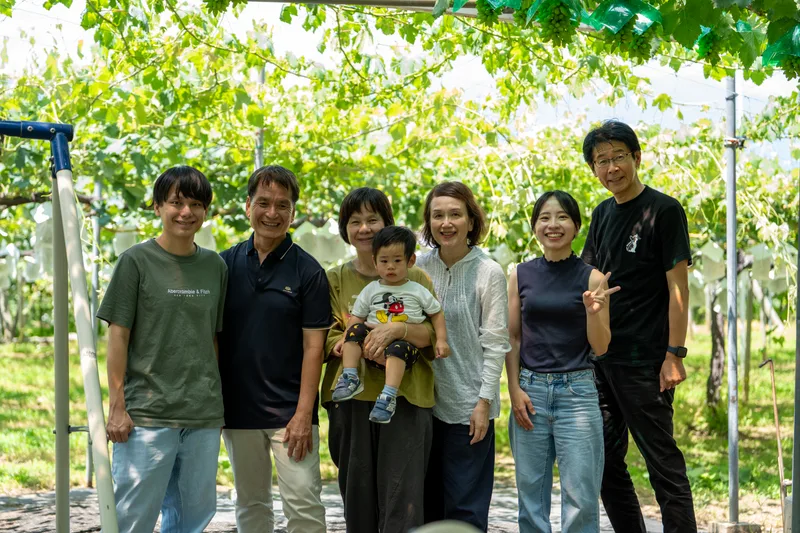
The picture a family trip almost never produces is the one with everybody in it. Someone is always holding the camera, so the person taking the photos stays outside them.
We photograph families in Tokyo, in stills and in film. Every place in this article is somewhere we have actually walked with our own child. Asking only about locations is fine — send us your dates and group size and we will come back with spots and time slots that suit them.
※ Hours, fees, photography rules, and bloom dates in this article are current as of September 2026. Whether a shoot is permitted and under what conditions is each site’s decision and can change, and cherry blossom peaks move with the weather. Please verify with official sources and with each site before shooting.
 Ask about photo spots on LINE
 Related Articles
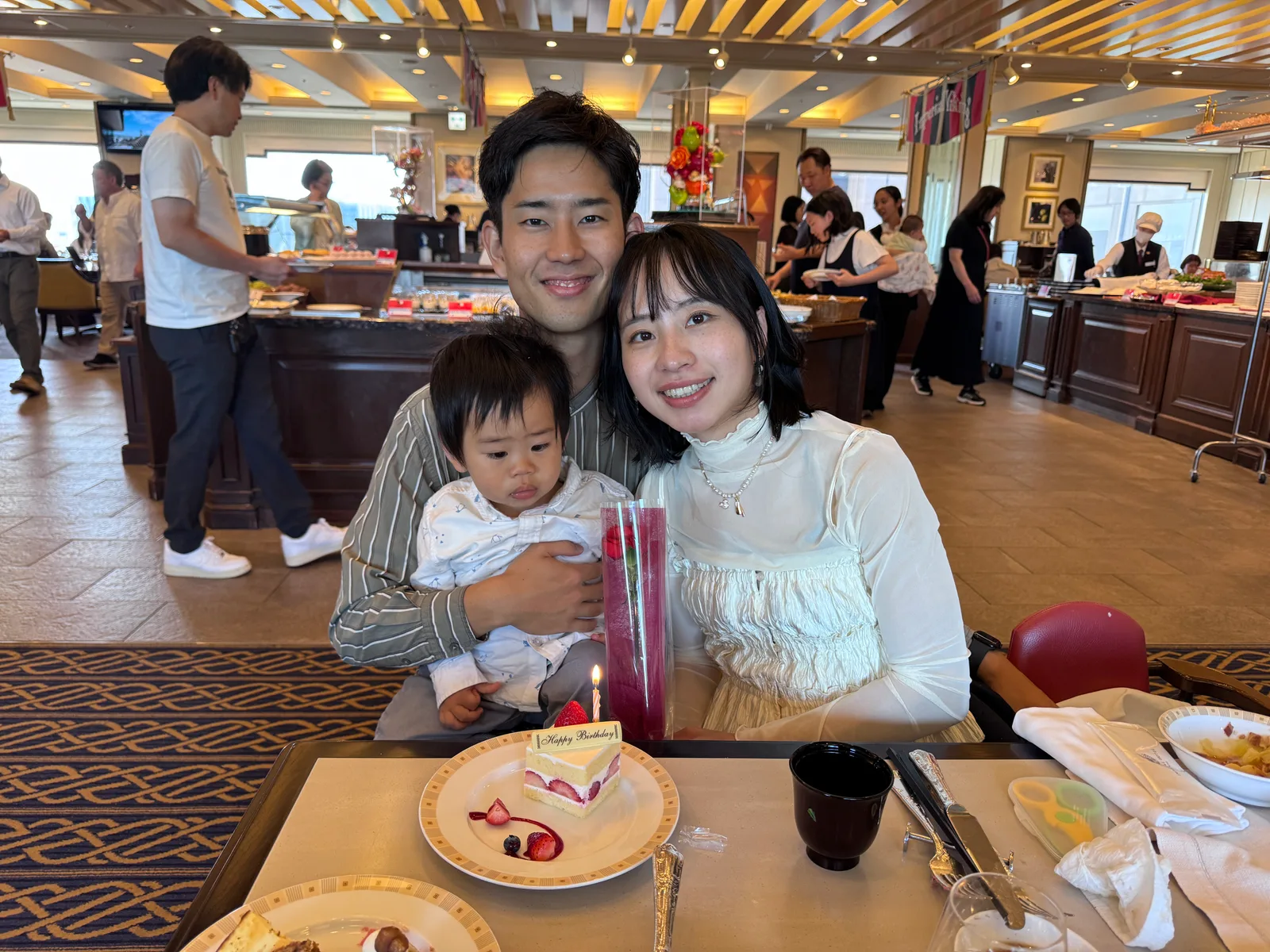
Tokyo Restaurants for a Family Treat: Private Rooms for Anniversaries & Grandparents (2026 Guide)
How to pick a slightly upscale family restaurant in Tokyo — private rooms, roomy seating, views, and anniversary touches where kids can still relax. Great for anniversaries and treating grandparents, from a Japan-Taiwan couple in Tokyo.
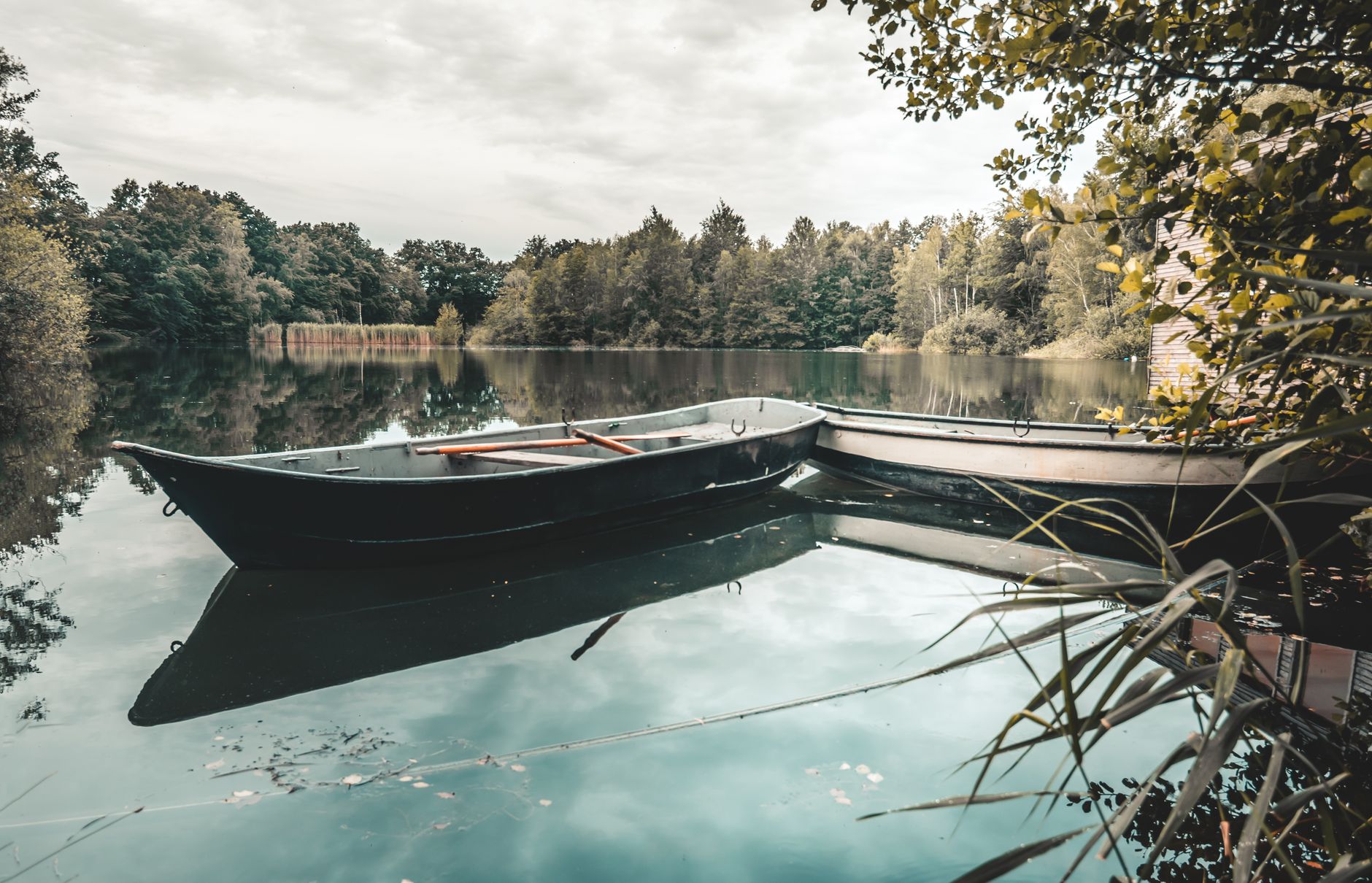
Kichijoji & Inokashira Park with Kids (2026): Boats, a Zoo & the Ghibli Museum
Kichijoji and Inokashira Park with kids: swan boats, small-animal encounters at Inokashira Zoo, the Ghibli Museum (reservation required), plus neighborhood strolls and lunch — a one-day plan from a Japan-based couple.
Ikebukuro Sunshine City with Kids (2026): Aquarium, Observatory & a Rainy-Day Plan
Ikebukuro Sunshine City with kids: the Sunshine Aquarium, observatory, planetarium, and Namja Town — indoor spots to fill a whole day, plus prices and a route, from a Japan-based couple. Great in rain or heat.
Author
Family in Tokyo Editorial
A Taiwanese-Japanese couple in Tokyo, exploring the city with our son every day.